
The service life of a pass-through can be up to 50 years – but service life is not the same as a warranty
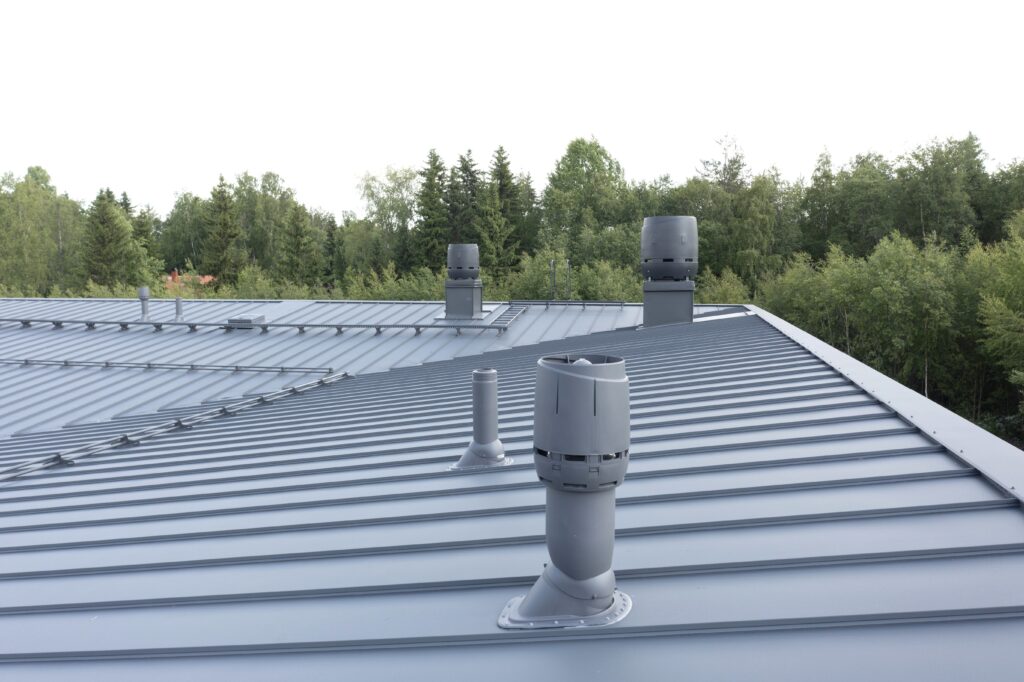
The actual service life of a roof pass-through can be significantly long, up to 50 years, when the product is installed correctly and maintained regularly. However, service life should not be confused with warranty: service life describes the product’s technical durability and performance, while the warranty covers manufacturing defects.
The service life of a pass-through refers to the period during which the pass-through is expected to retain its functionality and properties as intended. It is based on assessments of the durability of materials and structures, as well as experience of how the product performs in real-world operating and weather conditions. Service life is not a single fixed measure, but an estimate shaped by the combined effects of the environment, installation, maintenance, and use.
VILPE’s R&D Director, Veli-Pekka Lahti, explains that the guiding principle of VILPE’s product development is a service life of 40–50 years for roof pass-throughs. To ensure this, VILPE’s pass-throughs undergo multiple laboratory tests, including UV exposure to assess colour stability and material ageing.
Lahti emphasises that service life is different from the warranty period: a warranty is the manufacturer’s limited responsibility for manufacturing defects, whereas service life describes the product’s expected technical lifespan under real-world conditions. VILPE’s pass-throughs have a 10-year colour warranty and a 20-year technical warranty.
These factors affect the service life of a pass-through
The service life of a pass-through is primarily influenced by the environment, installation, and maintenance. Weather conditions such as UV radiation, temperature fluctuations, wind, and moisture continuously stress the materials. Although the TPE and polypropylene materials used in VILPE’s pass-throughs are designed to withstand Nordic conditions, environmental exposure affects all materials over time.
The quality of installation is one of the most critical factors affecting service life. According to Lahti, most issues related to pass-throughs result from improper installation—for example, openings that are made too large, screws that are overtightened, products installed the wrong way round, or excessive heating of the pass-through with an open flame during installation. A poorly installed roof pass-through has a short service life and typically begins to leak within a few years. Ensuring a successful installation primarily depends on carefully reading and following the installation instructions.
Maintenance also has a significant impact on service life. Dirt and contaminants accelerate material ageing by retaining moisture and weakening seals. Regular inspection and cleaning help prevent damage and ensure that the pass-through maintains its performance throughout its intended service life. Lahti notes that the condition of pass-throughs should be checked at least twice a year.
When should a pass-through be replaced?
A pass-through should be replaced when its reliability can no longer be ensured or when roof renovation makes replacement a sensible choice. Veli-Pekka Lahti recommends that pass-throughs are always replaced during major roof renovations, as old sealing compounds and connection points cannot be reused. The cost of a pass-through is small compared to the overall cost of a roof renovation, making replacement at the same time a practical decision.
Signs that a pass-through has reached the end of its service life include cracks, deformation, noticeable colour changes, and loosened fastenings. In some cases, damage may be hidden, such as failed seals or loosened fixings, meaning the problem only becomes visible as water leakage within the roof structure. Regular inspections help identify the need for replacement in good time. If the condition of a pass-through raises any doubts, replacing it is the safest and most durable solution.