
What Is the Financial Value of a Longer-Lasting Commercial Roof?
Research suggests that preventive maintenance can extend roof service life by several years. For commercial building owners, the financial implications of delaying a major roof replacement can be substantial. But how much are those additional years worth?
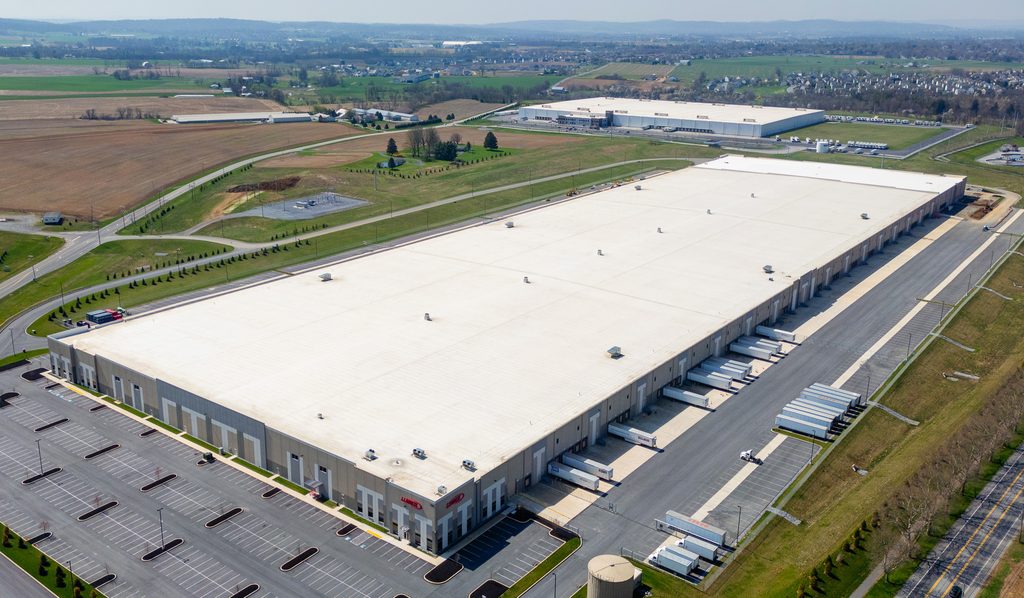
A commercial roof represents a considerable capital investment. Replacing a 50,000-square-foot roofing system can cost hundreds of thousands of dollars, making the timing of replacement an important consideration in property management and capital budgeting.
While roofing systems have expected service lives, their actual performance depends on installation quality, material durability, climate, drainage and maintenance practices. Two roofs of the same age may therefore be in very different condition.
A growing body of research suggests that systematic maintenance can help preserve roof functionality and, in some circumstances, extend service life. Beyond reducing the risk of damage, this raises an economic question: what is the financial value of keeping an existing roof in service for several additional years?
To explore this, we examined published research on roof longevity and calculated the financial implications of postponing a commercial roof replacement by three, five and eight years.
Can preventive maintenance add years to roof service life?
A study published in the Journal of Building Engineering in 2020 investigated the effects of preventive maintenance on flat roofs at 12 hospitals in Spain. The researchers analyzed maintenance records collected between 2002 and 2017 and used a statistical deterioration model based on Markov chains to evaluate maintenance strategies.
The study examined roofs with PVC, elastomeric and bituminous waterproofing membranes. The researchers estimated operating lives of approximately 28, 24 and 21 years, respectively, for the membrane systems studied.
Their analysis suggested that optimized preventive maintenance could extend the modeled service life of the roofs by up to eight years, depending on the roofing membrane and maintenance strategy. The results were based on a statistical deterioration model rather than observed service-life extensions (1).
The findings suggest that preventive maintenance strategies can influence the service life of roofing systems. They also demonstrate how deterioration models can help determine appropriate intervals for maintenance and membrane replacement. However, the eight-year figure should not be interpreted as a universal outcome. It is based on statistical modeling using historical maintenance data from a relatively small number of Spanish hospitals. The results may not be directly applicable to other roofing systems or operating environments. The study also did not evaluate continuous sensor-based monitoring. Nevertheless, the study provides a quantitative indication of the potential benefits of systematic maintenance.
Research from Carnegie Mellon University provides a complementary U.S. perspective. In a 2010 study, Coffelt and Hendrickson developed a life-cycle cost model that considered not only roof maintenance and replacement costs, but also costs associated with leaks and their impact on building occupants. Applied to roofs on the university campus, the model indicated that the economically optimal service life was approximately 30 years on average, with considerable variation between individual roofs (2).
The findings highlight an important consideration for building owners: extending a roof’s service life can have financial benefits, but those benefits must be weighed against increasing maintenance costs and the potential consequences of roof failure.
What is the financial value of additional service life?
Consider a hypothetical 50,000-square-foot commercial low-slope roof with an assumed total replacement budget of $10 per square foot, or $500,000. For this illustration, the budget covers the complete replacement project, including removal of the existing roofing system, new roofing materials, insulation, flashings and installation labor. Actual scope and costs vary with roof condition, system selection, location and project requirements. A U.S. commercial-roofing cost guide reports prices that vary by roofing system and project scope (4). A separate flat-roof pricing guide covers a broader range of roof types and project sizes (5). These sources provide context for the example, but do not establish $10 per square foot as a representative or standard market price.
Assume the roof would ordinarily be replaced after 25 years. If its condition allows replacement to be postponed by three, five or eight years, the owner retains the use of the existing roof while delaying a major capital expenditure.
The financial value of this delay can be estimated using discounted cash flow analysis. A dollar spent in the future has a lower present value than a dollar spent today. The difference depends on the discount rate, which reflects the time value of money and the owner’s financial assumptions.
Using an illustrative 6% annual real discount rate, the financial implications are as follows:
| Additional service life | Replacement year | Present-value benefit |
| 3 years | Year 28 | $80,190 |
| 5 years | Year 30 | $126,371 |
| 8 years | Year 33 | $186,294 |
Illustrative scenarios for a $500,000 replacement investment at a 6% annual real discount rate. The figures represent the present-value advantage of deferring the expenditure, measured at the originally planned replacement date (Year 25), before additional maintenance costs. They are not reductions in the contractor’s eventual replacement price.
In the five-year scenario, deferring the $500,000 expenditure reduces its present value at Year 25 to approximately $374,000, creating a time-value benefit of about $126,000.
The roof will still need replacing when its condition warrants it. The $126,000 is therefore not a saving on construction work, but the value—under the stated discount-rate assumption—of keeping the funds available for five additional years.
The 6% real discount rate is a scenario assumption, not a prescribed rate. Building owners should use a rate appropriate to their own financial circumstances. At a 4% real discount rate, the value of a five-year delay would be approximately $89,000; at 8%, it would be approximately $160,000.
Replacement cost also matters. For the same 50,000-square-foot roof, increasing the estimated cost from $10 to $15 per square foot raises the calculated five-year deferral benefit from approximately $126,000 to $190,000 at a 6% real discount rate.
These scenarios are not predictions of roofing performance. They illustrate the financial consequences if continued service can be justified.
When does extending roof life make financial sense?
A longer service life is not automatically the most economical outcome.
An aging roof may require additional inspections, localized repairs or other interventions to remain functional. The cost of those measures must be weighed against the financial benefit of postponing replacement.
Suppose the roof in our example requires an additional $5,000 per year in maintenance during the five-year extension. At a 6% real discount rate, these expenditures have a present value of approximately $21,000. Deducting them from the $126,000 benefit leaves a net financial advantage of around $105,000, before other potential costs.
These figures show why the additional cost of maintaining an aging roof matters: higher repair or inspection expenses can reduce or eliminate the financial advantage of deferral.
The appropriate decision depends on the roof’s condition, anticipated repair requirements, risk of failure and the owner’s investment priorities.
These calculations are deliberately limited to a single deferred replacement. A comprehensive life-cycle cost analysis would also consider subsequent replacement cycles, residual value, future cost developments and other building-specific factors (3).
The calculation illustrates the potential value of delaying replacement only when continued service is technically justified.
How condition-based maintenance supports better decisions
The challenge for building owners is determining whether an existing roof can safely and economically remain in service.
Regular inspections provide essential information about visible defects and deterioration. However, some moisture-related problems may develop within a roofing assembly before they become apparent during routine inspections.
Continuous moisture monitoring can complement established inspection and maintenance procedures by providing additional information about changing conditions within the roof structure.
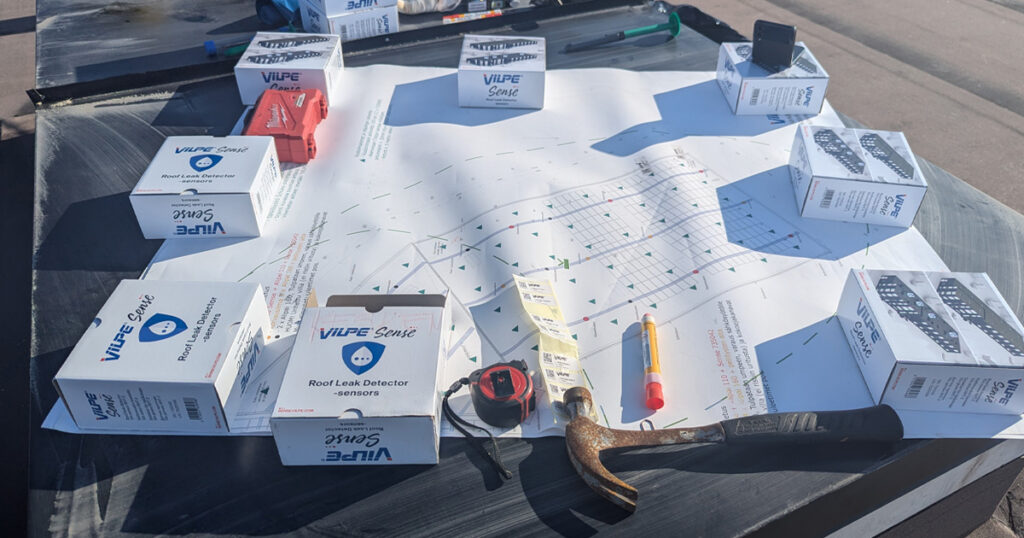
VILPE Sense leak detection technology is designed to help identify potential moisture problems, allowing maintenance professionals to investigate abnormal conditions and assess whether corrective action is required.
This information can support condition-based roof management alongside professional inspections and assessments.
Monitoring cannot eliminate material aging, prevent every leak or guarantee a particular extension in service life. Its contribution lies in improving access to information that can support timely maintenance decisions.
For owners managing extensive commercial properties or multiple buildings, this may also help prioritize interventions and plan capital expenditure more effectively.
The financial case for protecting existing roofing assets
The objective is neither to replace every roof at a predetermined age nor to delay necessary work, but to match the intervention to the roof’s condition and risk profile.
Published research suggests that effective maintenance can extend service life in suitable circumstances. The scenarios here show how even a modest postponement of a major replacement investment may have financial value.
For commercial building owners, timely information on roof condition can help balance repair requirements, replacement timing and capital planning.
Detecting and addressing moisture-related problems early can form part of protecting the long-term value of a roofing asset.
References
Financial calculation methodology
The illustrative analysis assumes a 50,000-square-foot roof, a total replacement project budget of $10 per square foot ($500,000), and an original replacement date at Year 25. This is an assumed project budget, not a quoted price. It includes removal of existing roofing, replacement materials, insulation, flashings and installation, but the actual scope and cost of any project depend on site conditions and specifications.
Replacement is deferred by three, five or eight years. All amounts are expressed in constant dollars. The 6% real annual discount rate is an illustrative financial assumption, not a rate recommended by NIST or prescribed for commercial property owners (3).
The present-value benefit of deferral is calculated as:
Benefit = C × [1 − (1 + r)⁻ⁿ]
Where C is the assumed replacement cost, r is the real annual discount rate and n is the number of years replacement is postponed.
Results are valued at the original replacement date, not at the initial installation date.
The maintenance scenario assumes an additional $5,000 per year, paid at the end of each of the five extension years. No additional monitoring-system investment is included.
The analysis excludes subsequent roof replacement cycles, residual values, taxes, financing arrangements and project-specific risks. It is not a complete life-cycle cost analysis or a calculation of the return on investment from VILPE Sense.
The replacement costs, service-life extensions and financial assumptions are illustrative. Actual outcomes depend on the condition and characteristics of the roofing system and the owner’s financial circumstances.