
Thogus Story
A case study about VILPE Sense in Advanced Manufacturing
Invest in Growth Instead of Guesswork
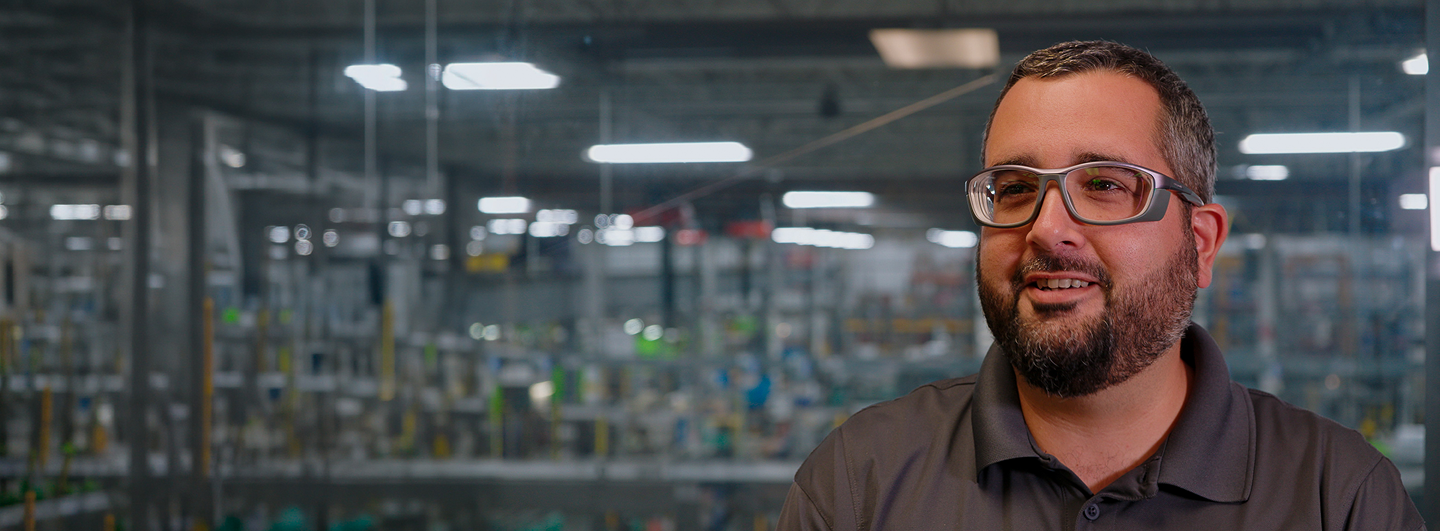
“You only see what’s on the outside,” says Tony Trout, Technical Team Manager at Thogus Products. “You don’t know what’s going on in between those membranes.” That’s the blind spot every building owner lives with, whether the roof in question sits over a retail floor or, in Thogus’s case, 40 injection molding machines.
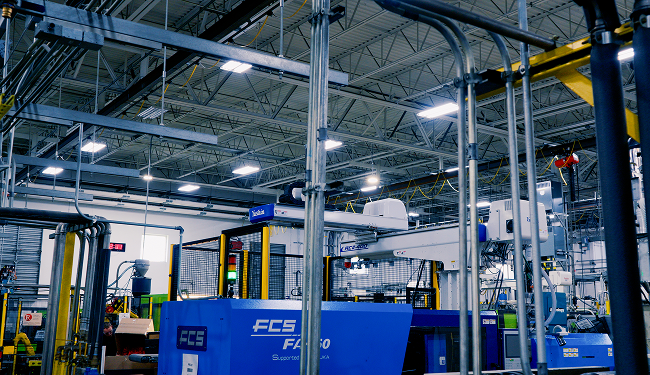
Thogus is a contract manufacturer and custom plastic injection molding company outside Cleveland, Ohio — and VILPE Sense’s first customer in the United States. They make plastic parts for various industries, where quality control is critical. Thogus keeps its plant climate-controlled because the materials themselves demand it. “Humidity, temperature, and moisture have a material impact on the processing of plastic to part,” CEO Matt Hlavin explains, “because a lot of your materials are hygroscopic — they pick up moisture. We have to have equipment that ensures it’s dry, delivered the same way every time.”
Matt explains that their precision operation spans across 40 machines and six-axis automation cells, which means the stakes of anything going wrong get expensive fast. “If there was a leak, that could shut our plant down,” Hlavin says. “That could create significant risk on production. Then you’ve got downtime, insurance claims, all sorts of problems.”
Trout puts it more plainly: “It just increases downtime, and time is money.”
For Thogus, VILPE Sense Proved its Worth
As an early adopter, Thogus has already realized a return on their investment. In the first year, VILPE Sense has already detected two moisture incidents that they were able to address within 24 hours, before damage occurred. Trout said after a storm, “We had some water coming in near some materials, and we’re up there looking for it,” Trout recalls. “Thankfully, from those sensors, an alarm was saying, ‘hey, there’s high moisture here.’ So we were able to isolate it and get the roofers on it to make the repair.”
The contractor found the source in about 15 minutes because VILPE Sense identified the impact area on the roof.
For Hlavin, as an owner, this makes a big difference to how he can run his business. Not just because of speed in addressing issues, but prevention. “Where the technology is so important is it’s predictive,” Hlavin says. “It’s not just if there’s a leak — it could be a moisture barrier issue. There are areas where water is getting in and staying in. If we see that on the sensor, we can go fix and remediate it, so it doesn’t propagate into a bigger problem.”
Tony Trout receives notifications right in his inbox, so he can react. “I can get a hold of the roofers or try to react to it myself. That reaction time helps big time.”
The Cost Every Building Owner Carries
Regular leaks are not unique to Thogus. Any owner of a large commercial roof is carrying the same exposure. A slow leak hides inside the roof assembly, usually unnoticed, until it becomes a production stoppage, a materials loss, a damaged piece of equipment, or a full-blown capital project.
How VILPE Sense Closes the Gap
VILPE Sense uses wireless sensors installed within the roof assembly to monitor moisture continuously, catching the early signs well before they become visible. When something changes, the alert comes straight to your inbox so you can act on it.
“Being able to have this in place is huge,” Hlavin says. “It’s one less distraction, one less reactive problem.” For Thogus, Hlavin says that the impact of VILPE Sense means he can invest more in growing his business. “Now I can allocate that budget towards capital, equipment, training, hiring — promoting our internal team and growing that team.” That’s better than the savings from avoiding a loss. It’s the ability to spend money on growth instead of guesswork.
Thanks to VILPE Sense, Tony is confident he’ll get more life out of it before it hits his budget. “It’s an older building with an older roof,” he says. “Knowing we have the system in place to help detect stuff sooner, hopefully we get another 10 or 15 years out of it. Replacing a roof on a building this size — I don’t want to see that price tag.”