
Hotel Roofs Under Control – Continuous Monitoring Complements Roof Warranties and Prevents Guest Disruption

Summary
- Even a small leak on a hotel roof can cause significant guest inconvenience and revenue loss, even if the hotel has a typical roof warranty or property insurance.
- Verifying a roof warranty starts with reviewing your insurance and warranty documents: what does the roof warranty cover, and does insurance cover roof leaks?
- How long a roof warranty lasts varies widely: material warranties can last up to 20–50 years, while installation warranties are often shorter.
- Continuous and automated roof monitoring with VILPE Sense helps plan repairs proactively and prevents costly moisture damage in hotels.
Are roof leaks covered by insurance? This is a question hotel owners and property maintenance teams ask when water starts leaking into hotel rooms or other areas. For a hotel, a roof leak is not just a structural issue but a direct risk to business continuity.
A hotel’s roof protection may consist of a separate roof warranty or be part of the overall property insurance. A typical roof warranty usually covers defects in roofing materials and installation for a specified period, but terms and limitations vary. That is why it is essential for hotels to understand their roof warranty and insurance conditions.
What does roof insurance cover?

Whether insurance covers a roof leak depends on when the leak occurred and what caused it. A clear manufacturing or installation defect identified during the warranty period is generally easier to prove than a slowly developing humidity issue with an unclear cause. In older buildings, the roof warranty may already have expired.
Normal wear and tear is usually not covered by insurance, and inadequate maintenance can reduce eligibility for compensation. Additional installations made later can also affect roof warranties and insurance terms, so building owner should always document and verify any changes in advance.
Because the scope of roof warranties and insurance varies, hotels benefit from automated roof monitoring. Continuous monitoring enables early intervention before issues escalate into business disruption.
Challenge: Why Roof Leaks Are Especially Critical in Hotels

Even a small hole in the roofing membrane can, over time, cause extensive moisture damage. Water travels downward through the structure and often ends up in hotel rooms—typically on upper floors, where the most valuable rooms or suites are located. A leaking roof can lead to operational downtime if the hotel must close rooms during peak season.
Maintenance team inspects hotel roofs usually only a few times a year. These inspections are slow and rely on visual assessment, meaning small leaks may go unnoticed. If damage occurs shortly after an inspection, it may worsen for months before being detected.
In addition, roof warranties may exclude damage caused by third parties. If the starting point of the damage is unknown, assigning responsibility becomes difficult. To avoid these uncertainties, roof warranty verification should be done well in advance. The first step in verifying a roof warranty is reviewing the building’s warranty documentation.
Solution: How VILPE Sense Works in Hotels
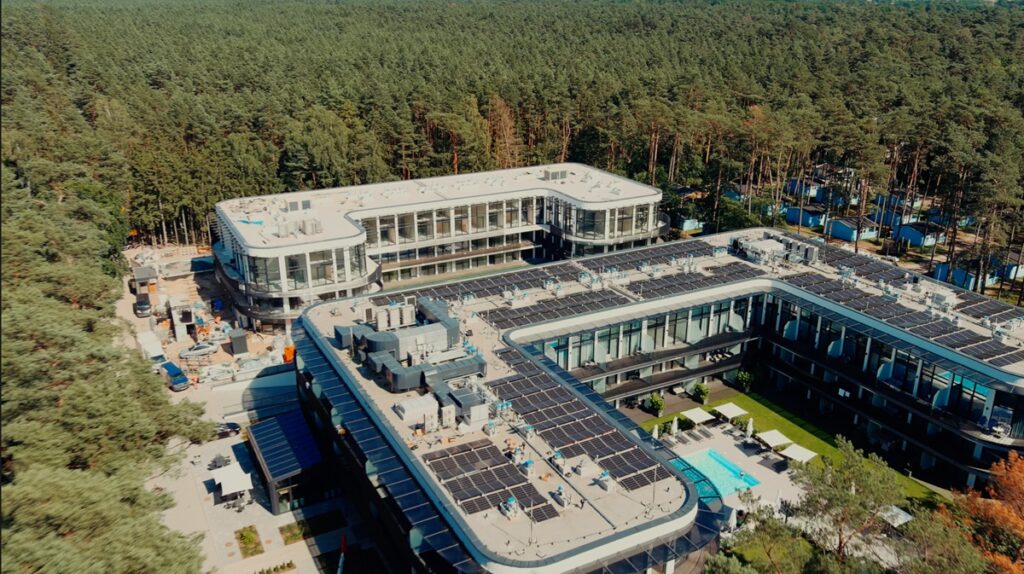
Hotel owners and property managers benefit from VILPE Sense’s smart and modern approach to monitoring and ventilating roof structures. One example is the Bursztynowe Resort & Spa in Poland. The resort consists of two buildings with a total low-slope roof area of 39,800 f². Solar panels make inspections more challenging, and the location on the Gulf of Gdańsk exposes the roofs to strong winds, high humidity, and intense sunlight.
“This is an investment in intelligent control and ventilation of flat roof structures. It supports maintaining buildings in the best possible condition through prevention, not repair,” says Krzysztof Kapela, investor at Bursztynowe Apartamenty.
Hotels can use VILPE Sense leak detection, VILPE Sense humidity control, or a combination of both. The Bursztynowe Resort & Spa has both VILPE Sense solutions in use.
Detecting Roof Leaks in Hotels
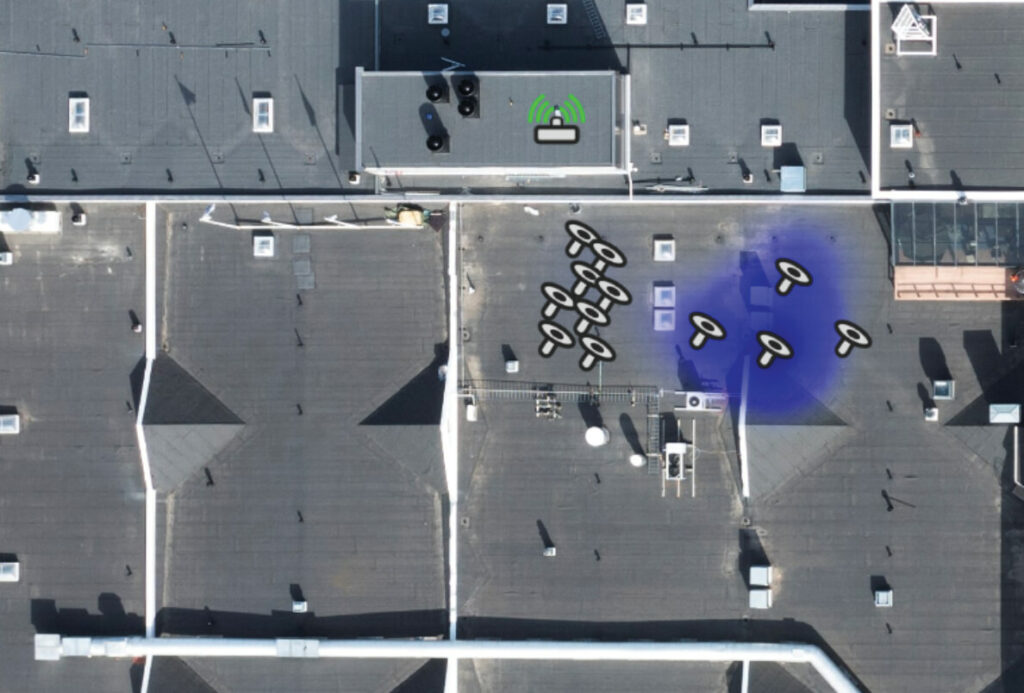
VILPE Sense leak detection sensors are installed on the roof at intervals of 13–16 feet (approximately 10 sensors per 2,150 f²). The sensors collect data on humidity levels within the roof structure. This data is displayed as a humidity map in the cloud service, allowing the hotel’s property manager or maintenance provider to identify potential leak locations. Users can set alert thresholds and receive email notifications when humidity levels rise. Early detection enables fast response and prevents water from entering interior spaces.
Ventilating Hotel Roof Structures
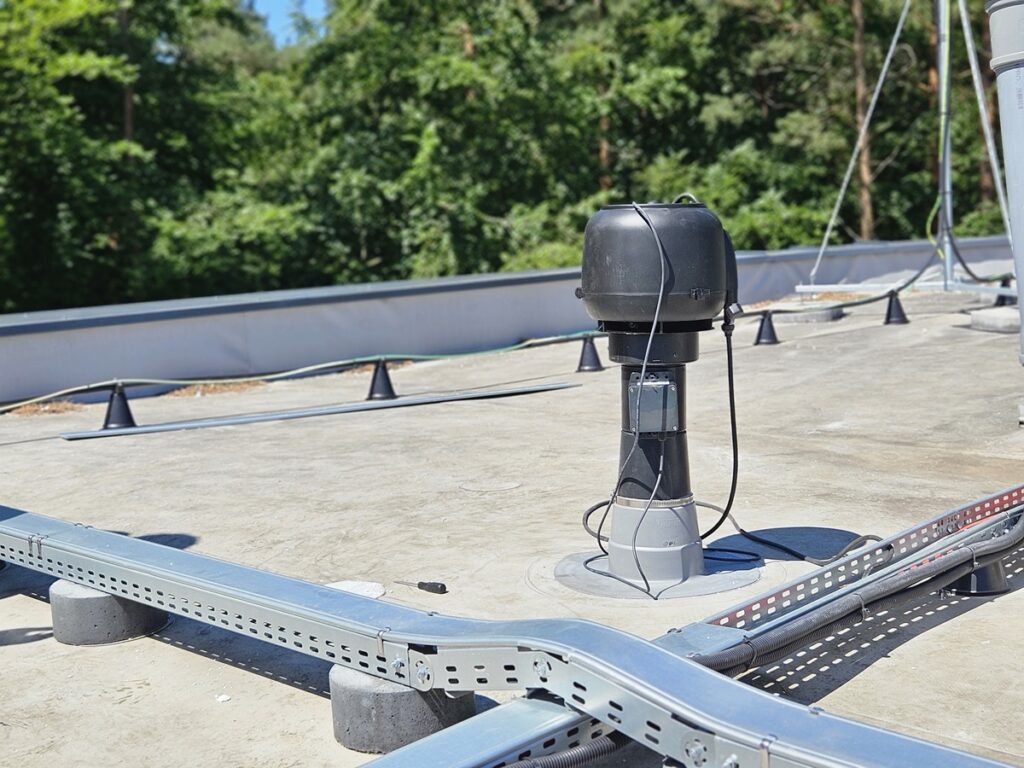
In addition to leak detection, hotels may need roof structure ventilation. In roof structures, trapped moisture e.g. from the building stage can cause rot and mold, but also lowers the insulation properties. VILPE Sense humidity control automatically ventilates roof structures based on conditions and keeps insulation dry.
VILPE Sense sensors measure outdoor temperature and relative humidity as well as corresponding values inside the roof structure. The system adjusts ventilation as needed. For example, during rainy weather, ventilation is on minimum level to prevent excess humidity from entering the structure. Data provided by the cloud service helps identify humidity level changes that could signal a leak.
Results: How Hotels Benefit from VILPE Sense
- Business continuity: Hotels do not need to close rooms or public areas due to leaks or moisture damage.
- Cost savings: Repairing small issues early is significantly more affordable than addressing major damage.
- Proactive maintenance: Real-time data helps target inspections and repairs accurately, reducing unexpected work and room closures.
- Remote monitoring: VILPE Sense continuously monitors roof conditions, eliminating the need for labor-intensive inspections across large roof areas.
- Roof warranty verification: Objective data from VILPE Sense shows where and when an issue began.
What All Hotels Should Know About Roof Warranties and Roof Monitoring
Illustration image: BGStock72
A Warranty Does Not Prevent Guest Disruption—Monitoring Does
A warranty does not prevent roof damage. A typical roof warranty may cover repair costs afterward, but compensation does not help in urgent situations when a hotel must close rooms and guests complain. Continuous roof monitoring, on the other hand, helps prevent problems altogether.
Continuous Monitoring Is the New Standard in Hotels
Monitoring large roof areas or multiple hotel buildings requires significant time and resources. VILPE Sense modernizes roof maintenance and monitoring, supporting proactive property management. This means identifying risks before they disrupt business operations.
Transparency and Documentation
Data produced by VILPE Sense adds transparency and fact-based support for decision-making. Documented measurement data supports roof condition monitoring, helps contractors target repairs accurately, and serves as valuable evidence in warranty processes. With access to both real-time and historical data, responsibilities become clearer, and collaboration between stakeholders improves.
How other buildings use VILPE Sense:
Frequently Asked Questions
Are roof leaks covered by insurance in hotels?
Insurance typically does not cover roof leaks caused by normal wear and tear or lack of maintenance. Coverage is more likely if the leak is due to a manufacturing or installation defect. In such cases, compensation may come from the roofing material manufacturer or the installation company. Always check your hotel’s insurance policy.
What does a typical roof warranty cover in hotel buildings?
A typical roof warranty covers material and installation defects for a defined period. Always review your own warranty documentation to understand what is included.
How long is a roof warranty, and what are its limitations?
Roof warranty periods typically range from 5 to 30 years, depending on the roofing solution and manufacturer. Warranty validity often requires regular maintenance. Roof warranties may also limit later installations—such as adding solar panels—which can affect coverage if conditions are not met.
How does continuous monitoring support roof warranties and warranty verification?
Continuous monitoring provides objective data on roof conditions, such as humidity levels. This data helps identify where and when damage occurred and can prevent small issues from escalating into problems not covered by the roof warranty.
Can roof monitoring reduce disruption for hotel guests?
Yes. Continuous roof monitoring helps identify risks before they affect interior spaces or guests. Proactive response reduces sudden maintenance work, room closures, and noise, ensuring smoother hotel operations and a more consistent guest experience.
Can VILPE Sense be integrated into a hotel building automation system?
Yes. Integration is possible. VILPE Sense can be connected to building automation systems, allowing property owners and maintenance providers to view roof data alongside other building systems.